Factory Visit: Distributors Tour Hunan Contact Lens Plant
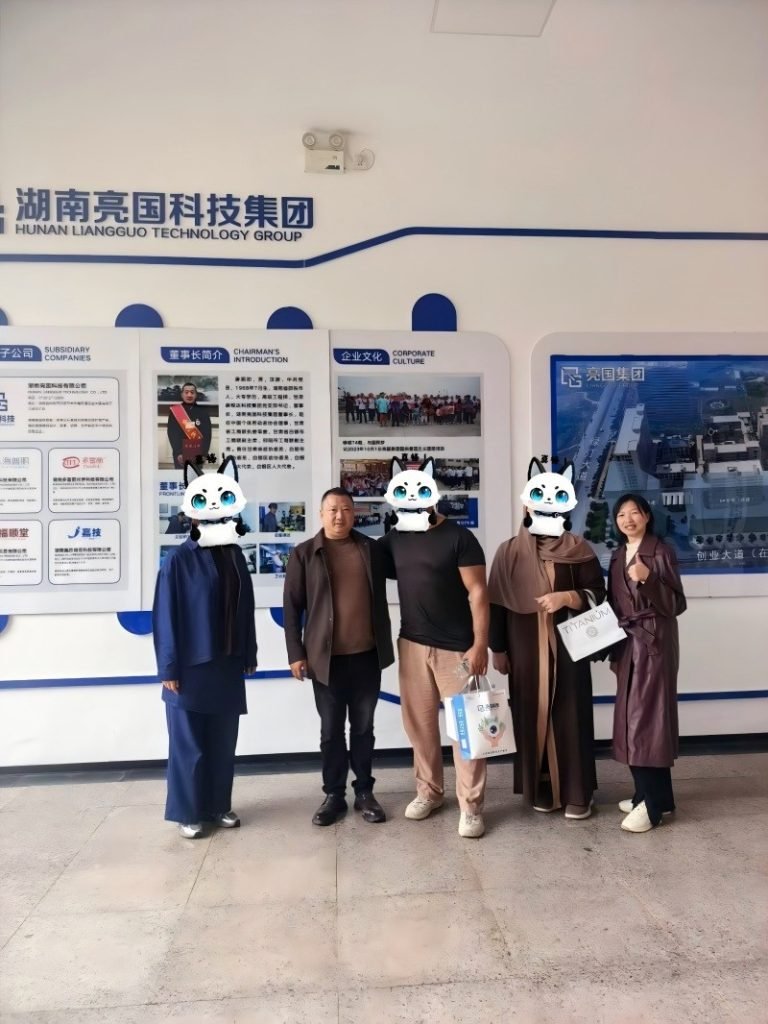
In short: in November 2026 a delegation of overseas distributors and private-label brand owners visited Hunan Haipuming Technology, the contact lens factory of Hunan Liangguo Technology Group. Over one working day they walked the same production route their orders follow — printing, extraction, 12-step inspection and packing — and checked four things no catalogue can show: pigment source, print registration, batch records and destination-market labelling.
Why a distributor asks to see the factory
A buyer of contact lenses cannot inspect the product itself. A lens is a 0.08 mm transparent film in a blister pack; the defect that ruins a pharmacy relationship — an off-centre iris print, a base curve that drifts 0.2 mm between lots, a seal that fails in a humid warehouse — is invisible at the sample stage.
So serious distributors inspect the process instead. That is what this visit was for: not a showroom photograph, but a walk through the line that produces reorder 1 and reorder 30 to the same standard.
The wall at the entrance: 1986, two factories, one quality system
The visit began where every visit at Liangguo Group begins — the corporate wall listing subsidiary companies, the chairman's introduction and the group's culture.
The structure it describes is what makes the supply chain short:
- 1986 — the family's manufacturing history starts with Gansu Constar Technology Group in northwest China. Forty years in vision care, two generations.
- Hunan Liangguo Technology Group — the group's contact lens base in Hunan, and the parent of Hunan Haipuming Technology, the entity that holds the U.S. FDA facility registration (FEI 3015587162).
- Beautylens Technology Co., Ltd. — the group's global marketing and service arm, handling export documentation, private-label artwork and export logistics. Not a trading intermediary: the sales office of the factories it sells.
For a distributor, that last point matters more than it sounds. When one company owns the press, the packing line and the export paperwork, there is no gap between what the factory can do and what the sales team promises. Certifications sit with the factories: CE (MDR), ISO 13485 quality management and the FDA-registered facility for the U.S. market.
Walking the line: what a lens goes through before it is packed
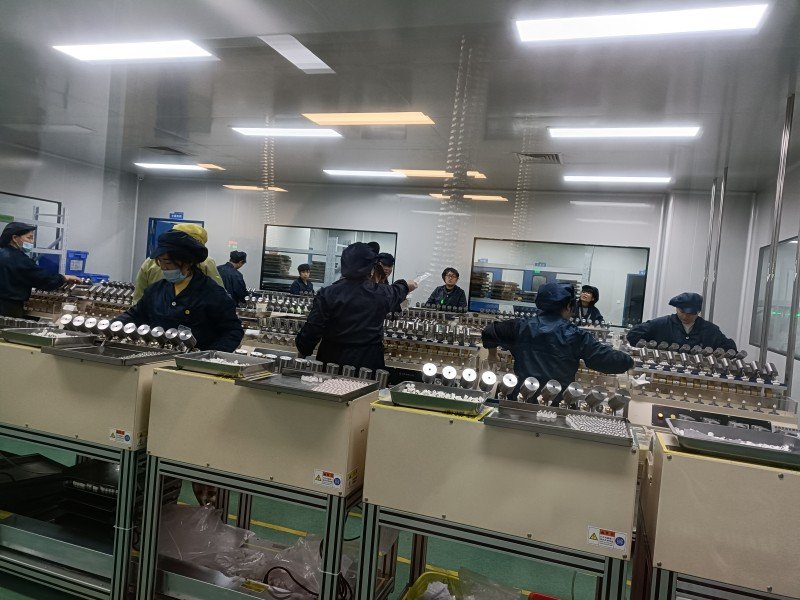
The delegation followed the production sequence in order, which is the only way to understand where cost and risk actually sit.
1. Material and pigment intake. Colour lenses live or die on pigment. The factory uses FDA-approved pigments from established international suppliers, and intake records are kept per batch — the first question any EU or Gulf buyer asks, because pigment compliance drives the registration file.
2. Printing. The group's colour lenses are built on a sandwich construction: pigment layer sealed between two hydrogel layers so it never contacts the eye. The visitors examined printed lenses under magnification for iris registration and edge coverage — the two defects that show up as "off-centre" or "halo" complaints at retail.
3. Extraction and hydration. Haipuming uses a lens-extraction process designed to remove residual monomer before hydration. Light transmittance is measured at 96%, against a national standard of 89% — a number buyers use as a proxy for how clean the extraction step runs.
4. Inspection. Every lens passes a 12-step inspection combining AI vision and multi-dimensional checks. The visitors watched rejected lenses being pulled and logged, then asked the question that separates a real QC line from a decorative one: what happens to the batch record? It is archived per lot, and can be produced with the shipment.
5. Packing and labelling. Blister sealing, secondary carton, batch number, production date and expiry date printed per destination market. This is where most supply problems are actually born — Arabic labelling for the Gulf, EUDAMED-ready artwork for Europe, SFDA documentation for Saudi Arabia. Preparing it in-house is why reorders do not stall at the border.
Four things buyers verify on site
| Checkpoint | The question behind it | What the visit showed |
|---|---|---|
| Pigment source | "Will my registration file survive an audit?" | FDA-approved pigments, batch-level intake records |
| Print registration | "Will the iris sit centred on every lens?" | Sandwich printing, lenses inspected under magnification on the line |
| Batch traceability | "If a pharmacy complains in month six, what do you send me?" | Lot-level batch records archived and retrievable with shipment |
| Destination labelling | "Who pays for relabelling at my end?" | Bilingual labels, batch coding, export cartons prepared in-house |
Two further points came up repeatedly in discussion: trial MOQs on a new SKU, and what a mixed container looks like when lenses, care solution and lens cases ship together. Both are operational questions, and both are answered by the same fact — the group runs lenses, solution and cases under one quality system, so a mixed carton leaves as one compliant shipment instead of three arrivals.
Key facts at a glance
| Item | Detail |
|---|---|
| Manufacturing history | Since 1986 — 40 years, two generations |
| Factories | Gansu Constar Technology Group; Hunan Haipuming Technology (Liangguo Group) |
| Certifications | CE (MDR), ISO 13485, FDA-registered facility (FEI 3015587162) |
| Design library | 1,458 product designs; 100+ new launches per year |
| Ready-ship range | 1,500+ designs, daily / monthly / yearly |
| Lead times | 7–10 days ready-ship designs; 30–45 days custom orders |
| Colour technology | Sandwich printing, Pantone-validated colours, 96% light transmittance |
| Quality control | 12-step AI-assisted inspection, lot-level batch traceability |
| Private label | OEM / ODM, custom packaging, bilingual labelling for destination market |
From visit to first order
Factory visits are most useful when they end with a decision rather than a photograph. What the delegation left with was a defined next step: a trial run on two SKUs, artwork for the destination market's labelling rules, and a written lead-time commitment per category.
If you are planning a similar visit, bring three things and the day becomes a working session instead of a tour:
- Your market's registration requirements — EUDAMED, SFDA, or your national device authority. Labelling and documentation can be checked against them on the spot.
- Your target retail price band — it decides material grade, lens diameter and packaging format before any quotation is useful.
- A packaging mock-up or reference pack — the fastest way to settle carton, blister and insert specifications.
Visits can be arranged for distributors, private-label brand owners and optical chains. Write to sales@eyesbeautylens.com or message +86 176 0731 1512 on WhatsApp with your market, categories and expected volumes, and we will propose dates around your production window.
Related reading
− Inside our Hunan factory: ISO 13485 and FDA-registered production
− Case study: Iraqi distributor places 30+ repeat orders in 5 years
− Contact lens supplier checklist for private-label brands
− Catalogue library — 1,500+ ready-ship designs
FAQ: visiting a contact lens factory
What can a buyer actually check during a factory visit?
Four things that samples cannot show: the pigment source and its intake records, print registration on the running line, whether batch records are archived and retrievable, and who prepares destination-market labelling.
How long does a factory visit take?
One working day covers the corporate introduction, the full production route, the inspection line, packing and a commercial discussion. Buyers who need to review artwork or packaging mock-ups usually allow a second half-day.
Can we combine lenses, care solution and lens cases in one visit and one container?
Yes. Lenses, multi-purpose solution and lens cases run under the same quality system, so a mixed container can leave as one compliant shipment with a single batch documentation set.
What are the lead times after a visit?
Ready-ship designs leave in 7–10 days; custom orders, including private-label printing and packaging, typically run 30–45 days depending on artwork approval and quantity.
Which certifications can be reviewed on site?
CE (MDR), ISO 13485 quality management documentation, and the U.S. FDA facility registration (FEI 3015587162). Documentation packages for EUDAMED and SFDA submissions can be discussed with the export team.
Beautylens Technology Co., Ltd. — the global marketing and service headquarters of a family enterprise founded in 1986. We manufacture, pack and export contact lenses, care solution and lens cases for distributors and private-label brands worldwide.